
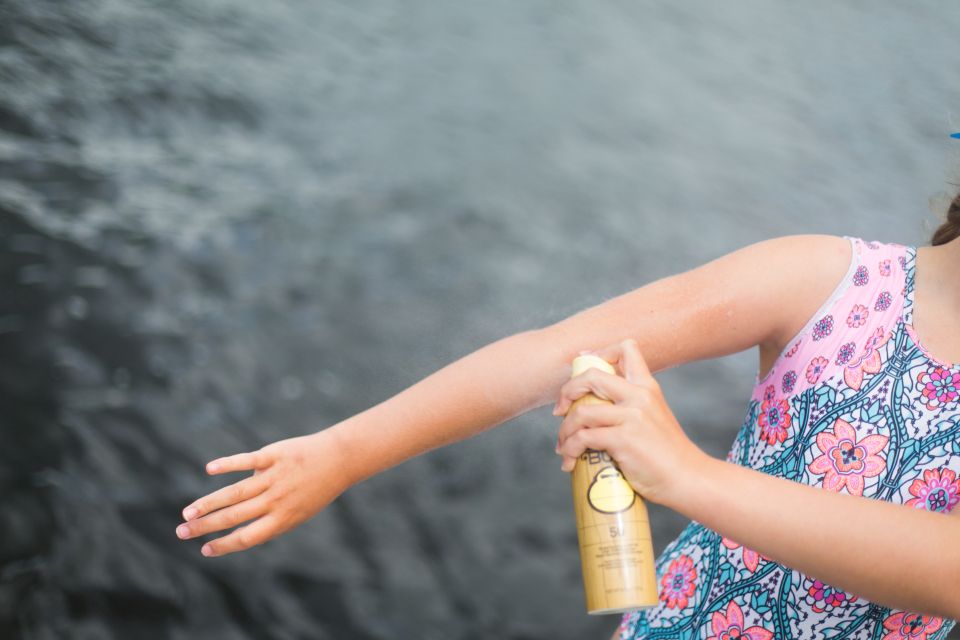
Most of us own a sunscreen. Far fewer of us use it the way the label intends. A bottle sitting in the bathroom cabinet does nothing for your skin.
This guide covers what to look for on the label, how much to use and when to put it on. It also looks at how sunscreen fits with makeup and the rest of your skincare. The advice draws on guidance from Cancer Council and ARPANSA.
Why sunscreen belongs in a daily routine
Skincare often focuses on serums, creams and treatments. Sun protection sits underneath all of it. A good routine can be undone by regular unprotected time outdoors.
Australia’s sun is strong, and the advice here reflects that. Cancer Council recommends sun protection whenever the UV index is 3 or above. You can check the daily UV forecast on a weather app or the Bureau of Meteorology site.
ARPANSA, the national radiation protection agency, suggests using sunscreen as part of your morning routine when UV is forecast to reach 3 or above. Treat it like brushing your teeth. It takes a minute and it becomes a habit quickly.
If you enjoy reading about natural beauty routines, sunscreen fits in there too. It is one of the simplest steps you can add. It sits comfortably next to a cleanser and a moisturiser.
What to look for on the label
Sunscreens sold in Australia must meet a national standard. That standard caps SPF claims at 50+. You will see products labelled from SPF 4 up to SPF 50+, according to ARPANSA.
Cancer Council recommends a sunscreen that is at least SPF 50+, broad spectrum and water resistant. You will see all three terms on the label. Each of them means something specific.
- SPF is the sun protection factor. It is a measure of how much UV radiation the product filters.
- Broad spectrum means the product filters both types of UV radiation.
- Water resistant means the product holds up better in water or sweat. For SPF 30 and above, the longest claim allowed is four hours.
The difference between SPF 30 and SPF 50 looks small. ARPANSA says SPF 50 filters 98 per cent of UV, compared with 96.7 per cent for SPF 30. Even so, no sunscreen blocks everything. Cancer Council notes that none gives 100 per cent protection, even when you apply it correctly.
How much sunscreen to use
This is where most people fall short. Cancer Council says most people apply less than the recommended amount. A thin smear gives you less protection than the number on the bottle suggests.
For an average adult, one full body application is about 35 mL. Cancer Council breaks that down to roughly one teaspoon for each body part. That means one for the face, neck and ears. Add one for each arm and one for each leg. Then use one for the front of the body and one for the back.
It looks like a lot the first time you measure it out. Try it once at home so you know what the right amount feels like. After that, you can judge it by eye.
Your face needs the same care as the rest of you. Do not forget the ears, the back of the neck and the tops of your feet. These are easy spots to miss.
When to put it on and when to top up
Timing matters as much as quantity. Cancer Council advises applying sunscreen about 20 minutes before you go outside. That gives it time to bind to your skin.
Reapply every two hours. Do it sooner after swimming, sweating or towel drying. ARPANSA also advises reapplying every two hours even if the label does not say so.
A water resistant label does not mean you can skip topping up. It only means the product lasts longer in water. Towelling off removes sunscreen too.
Reapplying over makeup is the tricky part for many people. You do not need to strip your face back each time. Some people keep a separate sunscreen on hand for midday top ups. Others use a hat and shade to cut down on exposure during the middle of the day.
Sunscreen with skincare and makeup
Order matters when you layer products. Cancer Council says to apply sunscreen first, onto clean, dry skin. Moisturiser or cosmetics go on afterwards.
Makeup with SPF is a common point of confusion. Cancer Council notes that cosmetics containing sunscreen are not regulated as therapeutic products in Australia. Their SPF is often very low. Do not rely on them as your only protection.
People who have had cosmetic treatments often ask extra questions about sun care. A page on IPL skin rejuvenation explains what that treatment involves. Your clinic will give you its own aftercare advice, and you should follow it. The same goes for anyone reading about how Botox works and planning an appointment.
Testing a new product
Skin reacts differently to different products. Cancer Council suggests doing a usage test before you commit to a new sunscreen. Apply a small amount to a patch of skin first and see how it behaves.
If you notice irritation, stop using the product. Cancer Council advises seeing a dermatologist for reactions. Do not keep using a product that bothers your skin just because it has a high SPF.
Storage and expiry dates
Sunscreen does not last forever. Check the expiry date before you apply it. Throw out anything that is past its date.
Heat is a problem too. Cancer Council says to store sunscreen below 30°C, because heat can cause the ingredients to separate and make it less effective. A glovebox or a beach bag left in the sun is a poor place to keep it.
A small bottle in your handbag is handy, but keep an eye on how long it has been there. Check the date again before each new season. Keep it somewhere cool and out of direct sun.
Sunscreen is one part of sun protection
Sunscreen works best alongside other measures. Cancer Council lists sun protective clothing, broad brimmed hats, shade and sunglasses. Use them together on high UV days.
Your eyes need looking after as well as your skin. If you want some background on eye health, this post looks at when people consider cataract surgery. Sunglasses are a simple everyday step for comfort and protection.
Babies need special care. Cancer Council does not recommend sunscreen for babies under six months. For them, clothing, hats and shade do the main work. For older children, use sunscreen alongside clothing, hats and shade, and test a small area first.
Frequently asked questions
Do I need sunscreen on cloudy days?
The advice is based on the UV index, not on how bright the day looks. Cancer Council recommends sun protection whenever UV is 3 or above. Check the forecast rather than the sky.
Is SPF 100 better than SPF 50?
You will not see SPF 100 on a sunscreen sold here. The Australian Standard limits labels to a maximum claim of SPF 50+. Look for at least SPF 50+, broad spectrum and water resistant.
How much is enough for just my face?
Cancer Council’s guide is about one teaspoon for the face, neck and ears together. That is more than most people use. Measure it once so you know what it looks like.
Can I rely on a moisturiser or foundation with SPF?
Cancer Council says the SPF in cosmetics is often very low and these products are not regulated as therapeutic products here. So they should not be your only protection. Apply a dedicated sunscreen first, then your makeup.
This article is general information only and is not medical advice. If you have concerns about your skin, a mole or a reaction to a product, speak with a doctor or another qualified health professional.