
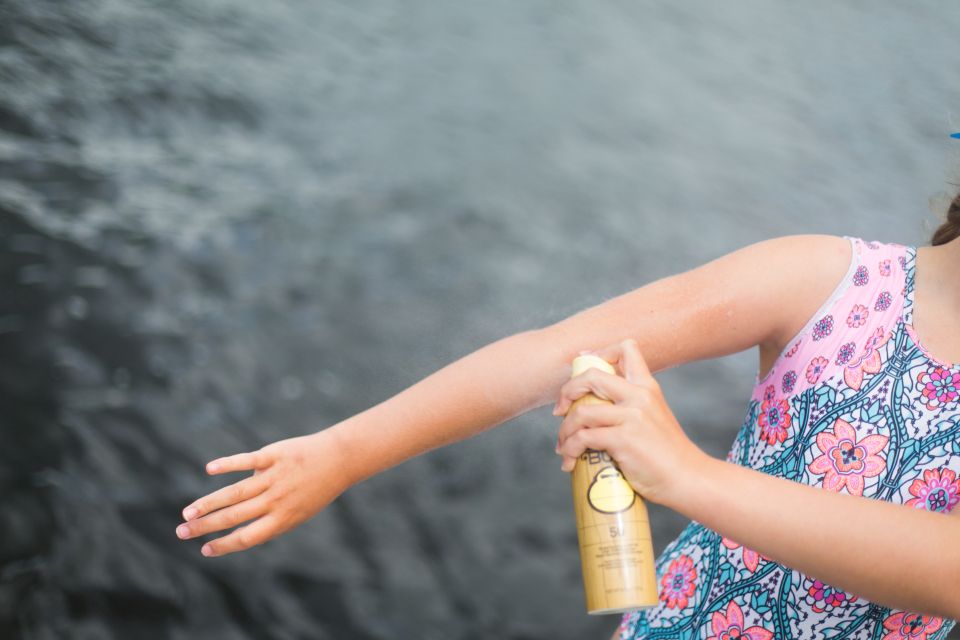
Most of us have a sunscreen somewhere in the house. A lot fewer of us actually use it the way the label says to. And if it’s just sitting in the bathroom cabinet, it isn’t doing anything for your skin.
The usual problem is simple. Cancer Council says most people put on less than the recommended amount, and a thin smear doesn’t give you the protection on the bottle.
People spend a lot of time on serums, creams and treatments, but sun protection is underneath all of that. You can have a great routine and still undo it by spending a lot of time outside without protection.
The sun in Australia is strong. Cancer Council recommends sun protection any time the UV index is 3 or above. That goes for cloudy days too, because it’s about the UV, not how bright it looks outside, so check the forecast and not the sky. You can find the daily UV forecast on a weather app or the Bureau of Meteorology site. ARPANSA, the national radiation protection agency, suggests putting sunscreen on as part of your morning routine when UV is forecast to hit 3 or more. Think of it like brushing your teeth. It takes a minute and you get used to it quickly.
And if you’re into natural beauty routines, sunscreen fits in fine there too. It’s one of the easiest things you can add, right next to your cleanser and moisturiser.
Reading the label
Sunscreens sold in Australia have to meet a national standard, and that standard caps SPF claims at 50+. According to ARPANSA, you’ll see products labelled anywhere from SPF 4 up to SPF 50+. So you won’t find SPF 100 on anything sold here.
Cancer Council recommends one that’s at least SPF 50+, broad spectrum and water resistant. SPF is the sun protection factor, which measures how much UV radiation the product filters. Broad spectrum means it filters both types of UV radiation. Water resistant means it holds up better in water or sweat, and for SPF 30 and above the longest claim allowed is four hours.
SPF 30 and SPF 50 don’t look that different on paper. ARPANSA says SPF 50 filters 98 per cent of UV, and SPF 30 filters 96.7 per cent. But no sunscreen blocks everything. Cancer Council says none of them give 100 per cent protection, even when you put them on properly.
How much to use
This is where most people go wrong, so it’s worth getting the amount right once and remembering it.
For an average adult, one full body application is about 35 mL. Cancer Council says that works out at roughly a teaspoon for each part of the body:
- one for your face, neck and ears
- one for each arm
- one for each leg
- one for the front of your body
- one for your back.
It looks like a lot the first time. Measure it out once at home so you know what the right amount looks and feels like, and after that you can just eyeball it. The teaspoon for your face, neck and ears is probably more than you’re using now.
Don’t skip the bits that are easy to miss either. Ears, the back of your neck and the tops of your feet get forgotten a lot.
Putting it on and topping up
When you put it on matters as much as how much. Cancer Council says to apply it about 20 minutes before you go outside so it has time to bind to your skin.
Then reapply every two hours, or sooner if you’ve been swimming, sweating or drying off with a towel. ARPANSA says to reapply every two hours even if the label doesn’t say so. Water resistant doesn’t mean you can skip it. It just means it lasts longer in the water, and a towel rubs it off anyway.
Topping up over makeup is the annoying part. You don’t have to take your whole face off each time. Some people keep a separate sunscreen handy for the middle of the day, and some use a hat and shade to cut down how much sun they get around lunchtime.
When you’re layering products, sunscreen goes on first, on clean, dry skin, Cancer Council says. Moisturiser or makeup goes on after that. Makeup with SPF in it confuses a lot of people. Cancer Council says cosmetics with sunscreen in them aren’t regulated as therapeutic products in Australia and the SPF is often very low, so don’t count on your foundation or moisturiser as your only protection.
If you’ve had a cosmetic treatment you might have more questions about sun care. Our page on IPL skin rejuvenation explains what that treatment involves, and your clinic will give you its own aftercare advice, so follow that. Same if you’ve been reading about how Botox works and you’ve got an appointment coming up.
New products, storage and the rest
Everyone’s skin is different. Cancer Council suggests doing a usage test before you start on a new sunscreen. Put a little on a patch of skin first and see how it goes. If it irritates your skin, stop using it, and Cancer Council says to see a dermatologist if you have a reaction. A high SPF isn’t a reason to keep using something your skin doesn’t like.
Sunscreen doesn’t last forever. Check the expiry date before you use it and throw it out if it’s past the date. Heat is a problem as well. Cancer Council says to keep it below 30°C, because heat can make the ingredients separate and stop it working as well. So the glovebox, or a beach bag sitting in the sun, isn’t a good spot. A small bottle in your handbag is handy, but keep track of how long it’s been in there and check the date again at the start of each season.
Sunscreen works best with other things. Cancer Council lists sun protective clothing, broad brimmed hats, shade and sunglasses, and on high UV days you should use them all together. Your eyes need looking after too. If you want some background on eye health, this post looks at when people think about cataract surgery. Sunglasses are an easy everyday thing for comfort and protection.
Babies are different again. Cancer Council doesn’t recommend sunscreen for babies under six months, so for them it’s clothing, hats and shade doing the work. For older kids, use sunscreen along with clothing, hats and shade, and test it on a small area of skin first.
This is general information only and isn’t medical advice. If you’re worried about your skin, a mole or a reaction to a product, talk to a doctor or another qualified health professional.